WB SET Mathematics Syllabus (Download PDF)
West Bengal SET (WB SET): The West Bengal State Eligibility Test (WBSET) Mathematics syllabus is officially released by the West Bengal College Service Commission (WBCSC) for candidates aspiring to become Assistant Professors in universities and colleges across West Bengal. The WBSET exam assesses the candidate’s depth of knowledge, conceptual understanding, and analytical ability in the field of Mathematical Sciences. This blog provides a comprehensive overview of the syllabus, exam pattern, and preparation tips along with a direct reference to the downloadable syllabus PDF.

About WB SET Mathematics Exam
The WBSET Mathematics paper evaluates a candidate’s academic understanding of both pure and applied mathematics. It is conducted in two papers — Paper I (General Teaching and Research Aptitude) and Paper II (Mathematics Subject). The syllabus aligns closely with the UGC NET and CSIR NET syllabi to ensure uniformity and national-level academic standards. The exam aims to select qualified educators and researchers for higher education institutions in West Bengal.
WB SET Eligibility Criteria
To apply for WBSET Mathematics, candidates must meet the following eligibility requirements:
Educational Qualification:
A Master’s degree in Mathematics or Applied Mathematics from a recognized university.
General category candidates must secure at least 55% marks in their qualifying examination.
Candidates belonging to OBC (NCL)/SC/ST/PwD/Third Gender categories need 50% marks.
Final-year postgraduate students can also apply provisionally.
Age Limit:
There is no upper age limit for applying for the WBSET.
WB SET Mathematical Sciences Syllabus
(Core Concepts)
This section covers the fundamental and intermediate topics across the major mathematical domains.
1. Analysis (Real and Complex)
Real Analysis: Sequences and series (convergence, limsup, liminf), continuity and uniform continuity ($\epsilon$-$\delta$ definition), Differentiability, Mean Value Theorem. Functions of a single variable, uniform convergence, Riemann integral. Concepts of set theory (finite, countable, uncountable), Bounded/unbounded sets, Archimedean property, completeness of $R$, Extended real number system.
Complex Analysis: Algebra of Complex numbers, Analytic functions, Cauchy’s Theorem and integral formula, Power series, Taylor’s and Laurent’s series, Residues, contour integration. Riemann Sphere and Stereographic projection, Lines, Circles, crossratio, Mobius transformations, Classification of singularities, Conformal Mapping.
2. Algebra and Linear Algebra
Linear Algebra: Space of $n$-vectors, Linear dependence, Basis, Linear transformation, Algebra of matrices, Rank, Determinants, Linear equations, Quadratic forms, Characteristic roots and vectors.
Algebra: Group, subgroups, Normal subgroups, Quotient Groups, Homomorphisms, Cyclic Groups, Permutation Groups, Cayley’s Theorem. Rings, Ideals, Integral Domains, Fields, Polynomial Rings.
3. Differential Equations
ODE: First order ODE, singular solutions, initial value problems. General theory of homogenous and non-homogenous Linear ODE, Variation of Parameters.
PDE: Lagrange’s and Charpit’s methods of solving First order Partial Differential Equations. PDE’s of higher order with constant coefficients.
4. Probability, Statistics, and Data Analysis
Probability (Axiomatic): Sample space, discrete probability, independence of events, Bayes Theorem. Axiomatic definition of probability.
Distributions: Discrete and continuous random variables, Binomial, Poisson and Normal distributions; Expectation and moments, Chebyshev’s inequality. Standard distributions (Berhount, Binomial, Multinomial, Hypergeometric, Poisson, Geometric, Uniform, exponential, Cauchy, Beta, Gamma, and normal (univariate and multivariate)).
Data Analysis: Graphical representation, measures of central tendency and dispersion. Bivariate data, correlation and regression (Least squares-polynomial regression), Application of normal distribution.
5. Theory of Statistics and Inference
Methods of Estimation: Maximum likelihood method, method of moments, minimum chi-square method, least-squares method. Properties of estimators (Unbiasedness, efficiency, consistency), Cramer-Rao inequality, Sufficient Statistics (Rao-Blackwell Theorem), UMVUE, Confidence intervals.
Tests of Hypothesis: Simple and composite hypotheses, types of errors, critical region, randomized test, power function, Most Powerful and Uniformly Most Powerful tests, Likelihood-ratio tests. Wald’s sequential probability ratio test.
Statistical Methods: Tests for mean and variance in the normal distribution, tests for correlation coefficients, Analysis of discrete data (chi-square test of goodness of fit, contingency tables). Analysis of variance: one-way and two-way classification. Nonparametric tests (sign test, median test, Mann-Whitney test, Wilcoxon test, rank correlation).
6. Operations Research (OR) and Sampling
Linear Programming: Convex sets, LPP. Feasible, basic feasible and optimal solutions. Extreme point and graphical method. Simplex method, Duality in linear programming. Transformation and assignment problems. Two person-zero sum games.
OR Modeling: Different types of models. Replacement models, sequencing theory, inventory problems. Queueing systems (performance measures, steady state solution of Markovian queueing models: M/M/1, M/M/C with limited waiting space).
Sampling and DoE: Simple random sampling (with and without replacement), Stratified sampling (allocation problem), systematic sampling. Basic principles of experimental design: Completely randomised, randomised blocks and Latin-square designs. Factorial experiments.
(Advanced & Specialized Topics)
1. Advanced Analysis and Measure Theory
Advanced Real Analysis: Riemann integrable functions, Improper integrals (convergence, uniform convergence). Euclidean space $R^n$, Bolzano-Welerstrass theorem, compact Subsets of $R^n$, Heine-Borel theorem. Fourier series. Taylor’s series. Inverse function theorem, implicit function theorem. Green’s theorem, Stoke’s theorem.
Measure Theory: Measurable and measure spaces, Extension of measure, signed measure, Jordan-Hahn decomposition theorems. Integration (monotone convergence, Fatou’s, dominated convergence theorems). Absolute continuity, Radon-Nikodym theorem, Fubini’s theorem.
2. Advanced Complex Analysis
Cauchy’s theorem for convex regions, Power series representation, Liouville’s theorem, Fundamental theorem of algebra, Riemann’s theorem on removable singularities, maximum modulus principle, Schwarz lemma, Open Mapping theorem, Casoratti-Welerstrass theorem. Bilinear transformations, Multivalued Analytic Functions, Riemann Surfaces.
3. Advanced Algebra and Number Theory
Algebra: Symmetric groups, alternating groups, Simple groups, Maximal ideals, Prime Ideals. Euclidean domains, principal Ideal domains, Unique Factorisation domains. Conjugate elements and class equations of finite groups, Sylow theorem, solvable groups, Jordan Holder Theorem, Structure Theorem for finite abelian groups. Field extensions, Elements of Galois theory, solvability by Radicals.
Number Theory: Divisibility: Linear diophantine equations. Congruences. Quadratic residues; Sums of two squares, Arithmatic functions $\mu, \tau, \phi$ and $\sigma$.
4. Functional Analysis and Topology
Functional Analysis: Banach Spaces, Hahn-Banach Theorem, Open mapping and closed Graph Theorems. Principle of Uniform boundedness, Hilbert Spaces, Projections. Orthonormal Basis, Riesz-representation theorem, Bessel’s Inequality, Parseval’s Identity, self adjoined and Normal Operators.
Topology: Elements of Topological Spaces, Continuity, Homeomorphism, Compactness, Connectedness, Separation Axioms, First and Second Countability, Separability, Subspaces, Product Spaces, Tychonoff’s Theorem, Urysohn’s Metrization theorem, Homotopy and Fundamental Group.
5. Advanced Differential Equations and Applied Mathematics
Differential Equations: Existence and Uniqueness of solution $dy/dx = f(x,y)$, Green’s function, Sturm-Liouville Boundary Value Problems. Cauchy Problems and Characteristics, Classification of Second Order PDE, Separation of Variables for heat, wave, and Laplace equations. Special functions.
Classical Mechanics: Generalized coordinates, Lagranges equation, Hamilton’s canonical equations; Variational principles least action; Euler’s dynamical equations for the motion of rigid body.
Fluid Mechanics: Equation of continuity, Euler’s equations of motion for perfect fluids, Two dimensional motion complex potential, Navier-Stokes’s equations for viscous flows.
Differential Geometry: Space curves (curvature and torsion), Serret Frehat Formula, Fundamental theorem of space curves. Curves on surfaces, Gaussian curvatures, Geodesics.
6. Advanced Numerical, Transforms, and OR
Numerical Analysis: Finite differences, interpolation. Numerical solution of algebric equation (Newton-Raphson method). Solutions on linear system (Gauss elimination method). Numerical differentiation and integration. Numerical solution of ODE (Picard’s, Euler’s method).
Integral Transforms: Laplace transform (Transform of Derivatives, Inverse Transform, Convolution Theorem). Fourier transforms (sine and cosine transform, Inverse Fourier Transform).
Mathematical Programming: Revised simplex method, Dual simplex method, Sensitivity analysis. Kuhn-Tucker conditions of optimality. Quadratic programming. Integer programming.
7. Advanced Statistics and Stochastic Processes
Probability: Zero-one laws of Borel and Kolmogorov. Almost sure convergence, Khintchine’s weak law of large numbers; Kologorov’s strong law of large numbers. Central limit theorems of Liapounov and Lindeberg-Feller. Conditional expectation, martingales.
Multivariate Analysis: Singular and non-singular multivariate distributions. Wishart distribution, Hotelling’s $T^2$, Mahalanobis $D^2$, Discriminant-Analysis, Principal components, Canonical correlations, Cluster analysis.
Time-Series and Stochastic Processes: Discrete-parameter stochastic processes; strong and weak stationary; autocovariance and autocorrelation. ARIMA models (Box-Jenkins). Markov processes in continuous time; Poisson processes, birth and death processes, Wiener process.
Design of Experiments: Factorial experiments, confounding and fractional replication. Split and strip plot designs; Quasi-Latin square designs; Youden square. Incomplete block designs (BIBD, PBIBD).
Industrial Statistics: Control charts for variables and attributes; Acceptance sampling by attributes/varieties. Reliability analysis.
Important Dates for WB SET 2025
Official Notification Release: September 2025
Application Form Start Date: October 2025
Last Date for Submission: November 2025
Admit Card Release: December 2025
Date of Examination: January 2026
Result Declaration: March 2026
Candidates are advised to keep checking the official WBSET website (www.wbcsconline.in) for updated timelines and announcements.
WB SET Paper Pattern
The WBSET Exam consists of two papers:
Paper I:
General paper on Teaching & Research Aptitude.
50 multiple-choice questions (2 marks each).
Duration: 1 hour.
Paper II:
Subject-specific (Mathematics) paper.
100 multiple-choice questions (2 marks each).
Duration: 2 hours.
Both papers are conducted in a single session of three hours (without any break). There is no negative marking, allowing candidates to attempt all questions confidently.
Tips for Preparation
Understand the Syllabus: Focus on key units such as Analysis, Linear Algebra, and Differential Equations.
Revise Core Concepts: Strengthen your understanding of fundamental theorems and proofs.
Practice Regularly: Solve previous year’s question papers of WBSET, UGC NET, and CSIR NET.
Time Management: Divide your preparation plan strategically between Paper I and Paper II.
Mock Tests: Attempt full-length tests weekly to build accuracy and speed.
Conclusion
The WBSET Mathematics Syllabus serves as a comprehensive guide for candidates aspiring to qualify for the post of Assistant Professor in West Bengal. Covering a wide range of mathematical domains from pure to applied mathematics, the syllabus ensures in-depth academic rigor. Aspirants should focus on consistent study, concept clarity, and continuous practice to achieve success in the WBSET 2025 examination and beyond.
RPSC Grade B
RPSC stands for the Rajasthan Public Service Commission. The RPSC is a constitutional body that conducts recruitment exams and advises the state government on recruitment, transfers, disciplinary actions etc.
if candidates are preparing for RPSC, then they also need to study History, Economy, Geography, Polity, and Current Affairs related to Rajasthan state as mentioned in the RAS Syllabus. Read/download the new and updated RAS Exam Pattern.
The RPSC Programmer age limit is 21 to 40 years. Candidates must have a bachelors or masters degree in Information Technology, Computer Science or Electronics & Communication. Candidates must have valid documents to support their claim of fulfilling the RPSC Programmer eligibility criteria.
The RPSC Programmer age limit is 21 to 40 years. Candidates must have a bachelors or masters degree in Information Technology, Computer Science or Electronics & Communication. Candidates must have valid documents to support their claim of fulfilling the RPSC Programmer eligibility criteria.
During the probation period, these Senior Teachers receive Rs 26500 monthly. After completing probation, the starting salary increases to Rs 37800 per month. After gaining experience, teachers can earn up to Rs 119700 monthly.
BEST OFFERING COURSES FOR YOU
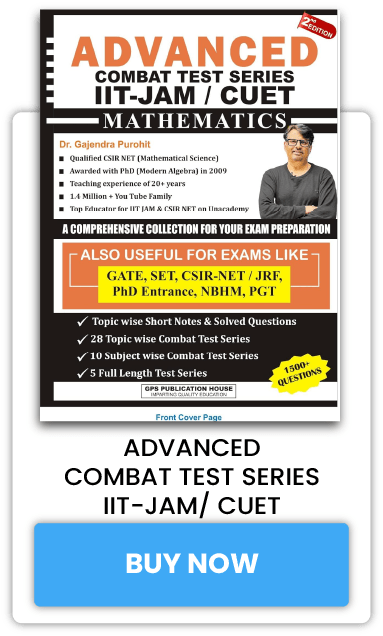
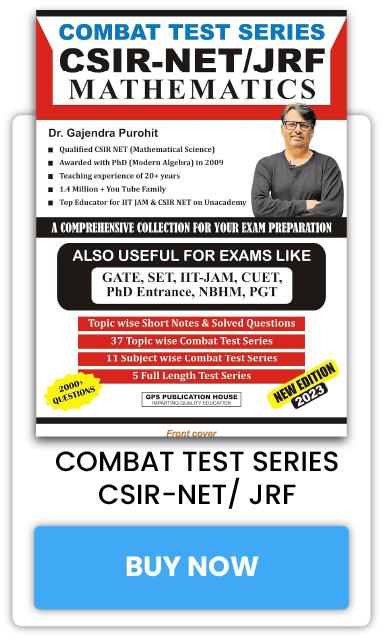
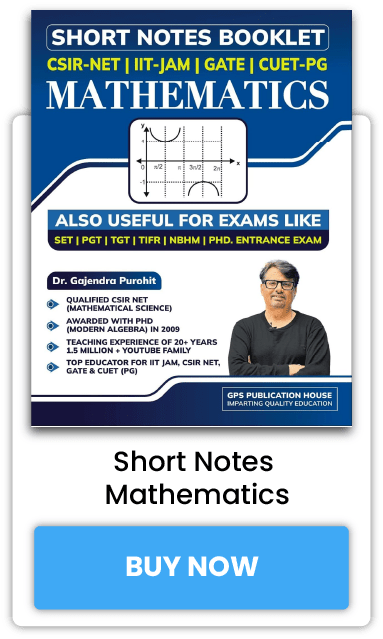
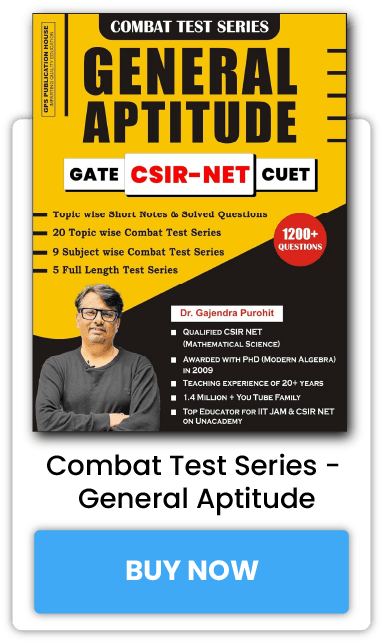
BEST BOOKS FOR IIT JAM/ CSIR-NET
BUY BOOKS ON OUR APP