RPSC Grade B Eligibility, Syllabus and More
Rajasthan Public Service Commission (RPSC) Grade B: The Rajasthan Public Service Commission (RPSC) conducts recruitment examinations for various prestigious posts under the Rajasthan government, including RPSC Grade B (Senior Teacher / Grade‑II) positions. These posts attract thousands of aspirants every year due to job stability, respect, and career growth opportunities in the education sector. To succeed in this competitive examination, candidates must have a clear understanding of the eligibility criteria, exam pattern, detailed syllabus (especially Mathematics), and a smart preparation strategy. This blog provides a comprehensive and updated overview to help aspirants prepare effectively.

About the RPSC Grade B Mathematics Exam
RPSC Grade B generally refers to Senior Teacher (Grade‑II) posts in government secondary schools of Rajasthan. Selected candidates are responsible for teaching students at the secondary level and contributing to academic planning and student development. The recruitment process is designed to assess both subject knowledge and teaching aptitude, ensuring the selection of qualified and competent educators.
The selection is primarily based on a written examination, usually conducted in two papers. Each paper evaluates different skill sets, including general awareness, educational psychology, and subject‑specific expertise.
RPSC Grade B Syllabus
Eligibility conditions may vary slightly depending on the official notification released for a particular year or subject. However, the general eligibility criteria are as follows:
Educational Qualification
A Bachelor’s degree in the relevant subject from a recognized university.
For Mathematics, candidates must have studied Mathematics as a core subject in graduation.
A Bachelor of Education (B.Ed.) or equivalent teaching qualification is usually required for teaching posts.
Age Limit
Minimum Age: 21 years
Maximum Age: 40 years
Age relaxation is applicable for candidates belonging to reserved categories as per Rajasthan government norms.
Nationality
The candidate must be an Indian citizen.
Preference or specific conditions may apply to Rajasthan domicile candidates as per the notification.
Aspirants are advised to carefully read the official RPSC notification for subject‑specific eligibility requirements.
RPSC Grade B Paper Pattern
The RPSC Grade B examination typically consists of two objective‑type papers:
Maximum Marks: 300.
Duration: Two Hours Thirty Minutes (2:30 hours).
Number of Questions: 150 multiple-choice questions.
Negative Marking: Applicable. One-third (1/3) of the marks prescribed for the question will be deducted for every wrong answer.
Subject Matter Distribution:
(i) Knowledge of Secondary and Senior Secondary Standard relevant subject matter.
(ii) Knowledge of Graduation Standard relevant subject matter.
(iii) Teaching Methods of relevant subject.
Topics Covered:
Subject content (Mathematics for Math teachers)
Teaching methods and pedagogy related to the subject
Marking Scheme
Each correct answer generally carries 2 marks
Negative marking is applicable (usually one‑third of the marks allotted per question)
RPSC Grade B Syllabus – Mathematics (Paper‑II)
The Mathematics syllabus is based on secondary and senior secondary level concepts, testing both conceptual clarity and application skills.
1. Number Systems:
Rational numbers (recurring/terminating decimals).
Irrational and Real Numbers, their decimal expansions, operations, and laws of exponents.
Euclid’s division lemma, Fundamental Theorem of Arithmetic.
2. Geometry:
Lines and Angles (properties, parallel lines and transversals).
Triangles: Sides, angles, properties, congruence, similarity, inequalities, concurrence of medians and altitudes.
Quadrilaterals: Properties of angles, sides, and diagonals of Parallelogram, Rectangle, Rhombus, Trapezium, and Square. Mid-point Theorem.
Circles: Terms, perpendicular from centre to a chord, equal chords, angle subtended by an arc, cyclic quadrilaterals, tangents.
3. Mensuration:
(i) Areas: Plane figures (triangles, quadrilaterals, circle, sectors, segments). Problems on area, perimeter, and circumference.
(ii) Surface Areas and Volumes: Cubes, cuboids, spheres (including hemispheres), right circular cylinders, and cones. Problems involving conversion of solids and mixed problems.
4. Algebra:
Polynomials: Degree, constant, linear, quadratic, cubic polynomials, zeroes/roots. Relationship between zeroes/roots and coefficients. Remainder and Factor Theorems.
Quadratic Equations: With real coefficients, formation from given roots, symmetric functions of roots.
Linear and Quadratic Inequations.
Complex Numbers: Algebra (addition, multiplication, conjugation), polar representation, properties of modulus and principal argument, triangle inequality, cube roots of unity, geometric interpretations.
Sequences and Series: Arithmetic and Geometric Progressions (AP and GP), arithmetic and geometric means (AM and GM), sums of finite AP and GP, infinite geometric series, Arithmetico-Geometric Progression. Sums of the first $n$ natural numbers, squares, and cubes.
Permutations and Combinations: Fundamental principle of counting, Factorial $n$ ($n!$), permutations, combinations, and simple applications.
Binomial Theorem: For a positive integral index, general term, middle term, properties of Binomial coefficients.
5. Matrices and Determinants:
Matrices: Definition, algebra, types, transpose, symmetric, and skew-symmetric matrices. Operations (addition, multiplication, scalar multiplication).
Determinants: Order two and three, properties, minors, co-factors. Applications in finding the area of a triangle.
Adjoint and Inverse: Adjoint and inverse of a square matrix, inverse using elementary transformations.
Linear Equations: Test of consistency and solution of simultaneous linear equations (two and three variables) using determinants and matrices.
6. Sets, Relations and Functions:
Sets: Representation, types, Venn diagrams, operations, De-Morgan’s laws, practical problems.
Relations: Ordered pair, relations, domain, co-domain, equivalence relation.
Functions: Special case of relation, domain, co-domain, range, invertible functions, even and odd functions, into, onto, one-to-one functions. Special functions (polynomial, trigonometric, exponential, logarithmic, absolute value, greatest integer, etc.). Sum, difference, product, and composition of functions.
7. Trigonometry:
Angles: Positive/negative angles, measuring in radians and degrees, conversion.
Trigonometric Ratios and Functions: Allied angles, periodicity, addition and subtraction formulae, multiple and sub-multiple angles.
Trigonometric Equations: General solution.
Inverse Trigonometric Functions: Principal value and elementary properties.
Heights and Distances: Problems.
8. Analytical Geometry:
(i) Two Dimensions: Cartesian coordinates, distance formula, section formulae, shift of origin.
Straight Line: Various forms of equation, slope, angle between two lines, distance of a point from a line, lines through the point of intersection, bisector of the angle between two lines, concurrency of lines.
Triangle Centres: Centroid, orthocenter, incentre, and circumcenter.
Circle: Various forms of equation, tangent, normal, chord, parametric equations, intersection with a straight line/circle, equation of a circle through points of intersection.
Conic Sections (Parabola, Ellipse, Hyperbola): Equation, foci, directrices, eccentricity, parametric equations, tangent, and normal equations.
Locus: Problems based on locus.
General Equation of Second Degree: Nature of conic.
Polar Equation: Polar equation of a conic, tangent, normal, asymptotes, chord of contact, auxiliary circle, director circle.
(ii) Three Dimensions:
Distance between two points, direction cosines, and direction ratios.
Straight Line: Equation in space, skew lines, shortest distance.
Plane: Equation of a plane, distance of a point from a plane and a line, Cartesian and vector equation of a plane and a line.
Angles: Between (i) two lines, (ii) two planes, (iii) a line and a plane. Coplanar lines.
9. Calculus:
Limits, continuity, and differentiability.
Differentiation: Sum, difference, product, and quotient rules. Chain rule, composite functions, trigonometric and inverse trigonometric functions, implicit functions, logarithmic and exponential functions, logarithmic differentiation, parametric forms. Second and third-order derivatives.
Theorems: Rolle’s and Lagrange’s Mean Value Theorems.
Applications of Derivatives: Rate of change, monotonic functions (increasing/decreasing), Maxima and minima (one variable), tangent and normal.
Integration: Anti-derivative. Integration by substitution, partial fractions, and by parts. Integration of rational and irrational functions.
Definite Integrals: Properties, application in finding the area under simple curves (lines, arcs of circles/parabolas/ellipses/hyperbola), and area between curves.
10. Vector Algebra:
Vectors and Scalars: Magnitude, direction, direction cosines/ratios.
Types of Vectors: Equal, unit, zero, parallel, collinear. Position vector, negative of a vector, components.
Operations: Addition, multiplication by a scalar. Position vector of a point dividing a line segment.
Products: Scalar (dot) product, projection of a vector on a line. Vector (cross) product. Scalar and Vector triple product and related problems.
11. Statistics and Probability:
Statistics: Mean, median, mode (grouped and ungrouped data). Calculation of standard deviation, variance, and mean deviation.
Probability: Probability of an event, addition and multiplication theorems, conditional probability, Bayes’ theorem.
Probability Distribution: Random variate, Bernoulli trials, and binomial distribution.
Part-II: Graduation Standard
1. Abstract Algebra:
Groups: Definition, examples, general properties, order of an element, cyclic group.
Permutations: Even and Odd permutations, groups of permutations, cyclic permutation, Alternating group.
Subgroups: Cosets, Lagrange’s theorem, Normal subgroup, conjugate elements, conjugate complexes, Centre of a group, Simple group, Normaliser.
Homomorphisms: Quotient Groups, Group homomorphism and isomorphism, elementary basic properties, fundamental theorem of homomorphism, isomorphism theorems, Cayley’s theorem.
2. Real Analysis:
Real Numbers: Complete ordered field, linear sets, bounds (lower and upper), limit points, closed and open sets.
Sequences and Series: Real sequence, limit and convergence of a sequence, convergence of series, tests for convergence, absolute convergence.
Uniform Convergence: Uniform convergence of sequence and series of functions.
3. Complex Analysis:
Complex Functions: Limits, continuity, and differentiability.
Analytic Functions: Concept, Cartesian and Polar form of Cauchy-Riemann equations.
Harmonic Functions: Conjugate function, Conformal mapping.
4. Advance Calculus:
Polar Coordinates: Angle between radius vector and the tangent, angle between two curves, length of polar tangent/sub-tangent/normal/subnormal.
Curvature: Pedal equation of a curve, derivatives of an arc, various formulae, Centre of curvature, chord of curvature.
Partial Differentiation: Partial differentiation, Euler’s theorem on homogeneous functions, chain rule, total differentiation.
Maxima and Minima: Functions of two independent variables, and of three variables connected by a relation, Lagrange’s Method of undetermined multipliers.
Curve Sketching: Asymptotes, double points, curve tracing, Envelopes and evolutes.
Special Functions: Theory of Beta and Gamma functions.
Integration: Differentiation and integration under the sign of integration.
Multiple Integrals: Double integral (change of order, polar coordinates, applications in areas), triple integral (application to find volume). Dirichlet’s integral. Quadrature and Rectification. Volume and Surface area of solids of revolution.
5. Differential Equations:
Ordinary Differential Equations (ODE): First order and first degree, first order but not of first degree, Clairaut’s equations (general and singular solutions).
Linear ODEs: With constant coefficients, homogeneous ODEs, second-order linear ODEs.
Simultaneous linear differential equations of first order.
6. Vector Calculus:
Vector Differentiation: Curl, Gradient, and Divergence. Identities involving these operators.
Vector Integration: Line and surface integral. Problems based on Stoke’s, Green’s, and Gauss’s theorems.
7. Analytical Geometry of Three Dimensions:
(i) Sphere: General Equation, Tangent Plane, Pole and Polar, Intersection of two spheres.
(ii) Cone: Enveloping cone, Tangent plane, Reciprocal cone, Three mutually Perpendicular generators, right circular cone.
(iii) Cylinder: Right circular cylinder, Enveloping cylinder.
8. Statics and Dynamics:
Statics: Composition and resolution of co-planar forces, component of a force in two given directions, equilibrium of concurrent forces, parallel forces and moment.
Dynamics: Velocity and acceleration, simple linear motion under constant acceleration, Laws of motion, projectile.
9. Linear Programming:
Introduction and Terminology: Constraints, objective function, optimization, types of L.P. problems, mathematical formulation.
Graphical Method: Solution for problems in two variables, feasible and infeasible regions/solutions, optimal feasible solutions (up to three non-trivial constraints).
Advanced Topics: Convex sets and their properties, Simplex Method, Concepts of duality, Framing of dual programming.
Applications: Assignment problems, Transportation problems.
10. Numerical Analysis and Difference Equation:
Interpolation: Difference operators and factorial notation, Differences of polynomial, Newton’s formulae (forward and backward), Divided differences, Newton’s general interpolation formulae, Lagrange interpolation formula. Central differences (Gauss, Stirling, and Bessel formulae).
Numerical Methods: Numerical Differentiation. Numerical integration (Newton-Cotes quadrature formula, Gauss’s quadrature formulae, Trapezoidal, Simpson’s, and Weddle’s rules, Estimation of errors).
Solution of Equations: Algebraic and Transcendental equations (bisection method, iteration method, Regula Falsi, and Newton Raphson methods).
Difference Equations: Linear difference equations with constant and variable coefficients. First and higher order homogeneous and non-homogenous linear difference equations, Complementary functions, Particular integral.
Part-III: Teaching Methods
1. Foundations of Mathematics Teaching:
Meaning and Nature of Mathematics.
Mathematics as in National Curriculum Framework (NCF).
Linkage of Mathematics with other school subjects curriculum.
Contribution of Indian knowledge system in the development of Mathematics.
2. Objectives and Taxonomy:
General and Specific objectives of Mathematics Teaching.
Bloom’s Taxonomy.
3. Methods and Approaches:
Methods and approaches of Mathematics Teaching (analytic, synthetic, inductive, deductive, Project & Laboratory).
Supervised study, Programmed Learning, Experiential and Constructive Learning in Mathematics.
4. Planning and Aids:
Importance & meaning of Lesson Plan (Herbertian Approach), Unit Plan (Morrison Approach).
Audio-Visual aids in Mathematics.
Technological Pedological Content Knowledge (TPCK).
5. Teacher Characteristics and Evaluation:
Academic & Professional characteristics of a Mathematics Teacher.
Importance and characteristics of Unit test, Achievement test, Diagnostic test, and steps of their preparation.
Concept of 360-degree assessment in Mathematics.
—–Examination Scheme for Senior Teacher (Paper-II):
Maximum Marks: 300.
Duration: Two Hours Thirty Minutes (2:30 hours).
Number of Questions: 150 multiple-choice questions.
Negative Marking: Applicable. One-third (1/3) of the marks prescribed for the question will be deducted for every wrong answer.
Subject Matter Distribution:
(i) Knowledge of Secondary and Senior Secondary Standard relevant subject matter.
(ii) Knowledge of Graduation Standard relevant subject matter.
(iii) Teaching Methods of relevant subject.
MathsCare by GP Sir offers both free and premium courses for IIT JAM Mathematics aspirants, focusing on deep conceptual learning and exam-oriented practice:
Targeted Courses:
Specialized courses for RPSC, UPPSC LT Grade, and GIC Lecturer examinations.
Practice-Oriented Sessions:
Combat Classes are free live sessions focused on rapid problem-solving techniques and conceptual clarity.
Books:
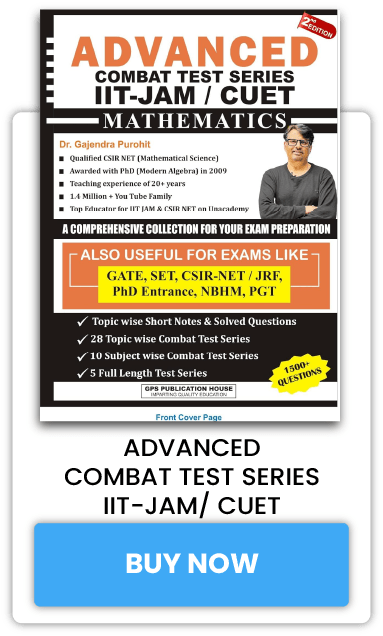
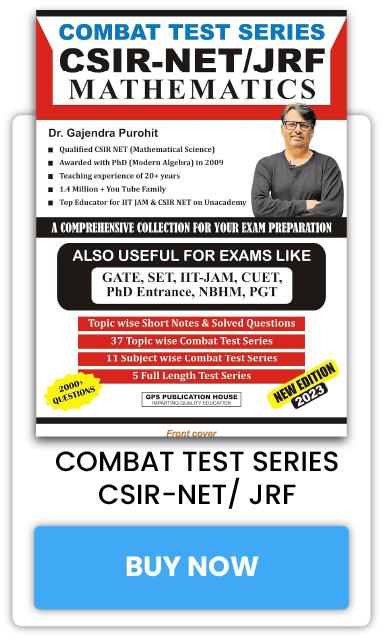
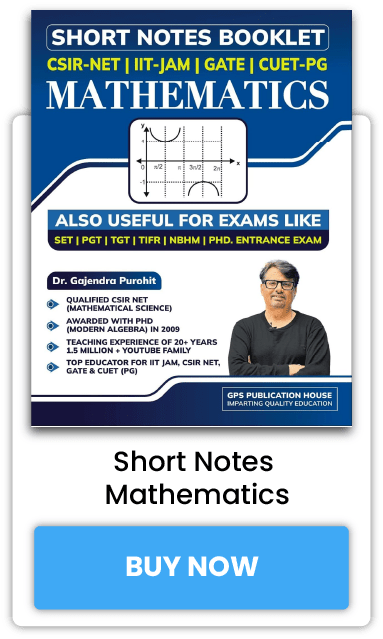
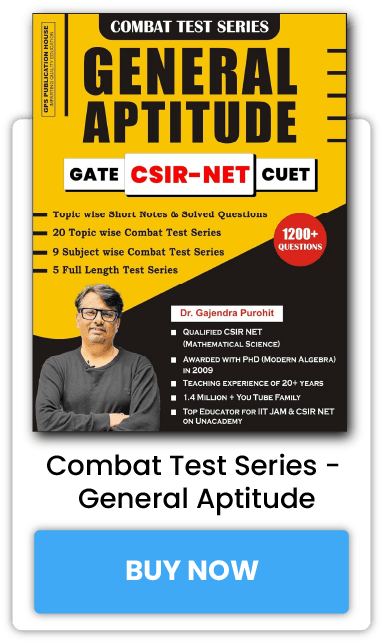
Printed study materials such as the Short Notes Booklet and Combat Series Workbook are available for comprehensive revision.
RPSC 2nd Grade Recruitment Timeline and Notification
For the 2025 RPSC Senior Teacher Grade II Recruitment:
Exam Dates: September 7 to 12, 2025.
Vacancies: Around 2,129.
Candidates should regularly check the official RPSC website (rpsc.rajasthan.gov.in) for official confirmation of the syllabus, schedule, and admit card details.
RPSC 2nd Grade Preparation Strategy
Understand the Syllabus Thoroughly
Break the syllabus into small topics and plan daily study goals.
Strengthen Fundamentals
Mathematics requires clarity of concepts. Revise basics before attempting advanced problems.
Practice Previous Year Questions
This helps understand question trends and difficulty level.
Focus on Rajasthan‑Specific GK
Give special attention to state history, geography, culture, and current affairs.
Mock Tests and Time Management
Regular mock tests improve accuracy and speed while reducing exam anxiety.
Revision Strategy
Maintain short notes and formulas for quick revision before the exam.
Conclusion
The RPSC Grade B (Senior Teacher) examination is a golden opportunity for candidates aspiring to build a stable and respected career in the education sector. A clear understanding of eligibility criteria, exam pattern, and subject‑wise syllabus—especially Mathematics—is essential for effective preparation. With a disciplined study plan, consistent practice, and strategic revision, candidates can significantly improve their chances of success. Always stay updated with official notifications and plan your preparation accordingly.
RPSC Grade B
RPSC stands for the Rajasthan Public Service Commission. The RPSC is a constitutional body that conducts recruitment exams and advises the state government on recruitment, transfers, disciplinary actions etc.
if candidates are preparing for RPSC, then they also need to study History, Economy, Geography, Polity, and Current Affairs related to Rajasthan state as mentioned in the RAS Syllabus. Read/download the new and updated RAS Exam Pattern.
The RPSC Programmer age limit is 21 to 40 years. Candidates must have a bachelors or masters degree in Information Technology, Computer Science or Electronics & Communication. Candidates must have valid documents to support their claim of fulfilling the RPSC Programmer eligibility criteria.
The RPSC Programmer age limit is 21 to 40 years. Candidates must have a bachelors or masters degree in Information Technology, Computer Science or Electronics & Communication. Candidates must have valid documents to support their claim of fulfilling the RPSC Programmer eligibility criteria.
During the probation period, these Senior Teachers receive Rs 26500 monthly. After completing probation, the starting salary increases to Rs 37800 per month. After gaining experience, teachers can earn up to Rs 119700 monthly.
BEST OFFERING COURSES FOR YOU
BEST BOOKS FOR IIT JAM/ CSIR-NET
BUY BOOKS ON OUR APP