Lakshya Batch – UPPSC GIC Lecturer Mathematics Course
Rajasthan Public Service Commission (RPSC) Grade B: The Lakshya Batch for UPPSC GIC Lecturer Mathematics is a carefully designed course to help aspirants achieve success in the UPPSC GIC Lecturer Examination. Beginning on 21 August, this batch is dedicated exclusively to Mathematics and aims to provide comprehensive preparation through a combination of live classes, recorded lectures, topic-wise notes, structured test series, and expert mentorship sessions. If you are aspiring to secure the Mathematics Lecturer position, this batch offers a complete and disciplined pathway for preparation.

About the Lakshya Batch
Exclusively designed for UPPSC GIC Lecturer Mathematics aspirants.
Classes begin on 21 August, ensuring systematic syllabus coverage from the start.
Students are advised to go through all course features, policies, and guidelines before enrollment.
The course combines concept clarity, in-depth problem-solving, and test-based assessment to prepare candidates thoroughly for both the prelims and mains examinations.
Course Features
Complete Mathematics syllabus coverage aligned with UPPSC GIC Lecturer requirements.
Live and Recorded Classes to provide flexible learning options.
Topic-wise PDF Notes (Hindi & English) available offline only in the MathsCare application.
Daily Practice Problems with Solutions to strengthen problem-solving skills.
Weekly Tests and Full Test Series (Hindi & English) for continuous performance tracking.
Mentorship Sessions with GP Sir, focusing on exam strategies, doubt resolution, and motivation.
Other Details
Free Access Includes: Students receive a Foundation Course with live classes and pre-recorded YouTube playlists, along with a Complete Test Series covering the full syllabus for self-assessment.
Policies & Rules: The course is valid for one year with extension available at a fee. It enforces a strict device policy allowing login from one mobile and one laptop only, and sharing of content leads to permanent account suspension. Professional behavior is required, and misconduct results in removal. No refunds are allowed under any circumstances.
Doubt Support: Dedicated WhatsApp groups and regular doubt-clearing sessions ensure that students can clarify concepts effectively.
Login Access & Technical Policy: Issues due to personal devices or internet problems are not grounds for refunds or extensions. Students must keep devices and apps updated. Minor technical glitches are typically resolved within 24–72 hours.
Platform & Technical Requirements: The layout or features may vary with app updates, but content coverage remains the same. Students may need to manually update or reinstall the app in some cases. Windows Requirements include Windows 10, 8GB RAM, updated Chrome browser, and a stable internet connection.
Language/Medium: Instruction will be in English with Hindi explanations (Hinglish) for better understanding.
UPPSC GIC Important Dates
Notification Release: 12 August 2025
Application Start: 12 August 2025
Last Date to Apply & Fee Payment: 12 September 2025
Correction Window Ends: 19 September 2025
UPPSC GIC Paper Pattern
Prelims Examination:
Objective type paper of 300 marks.
General Studies: 40 questions × 2.5 marks each = 100 marks.
Optional Subject (Mathematics): 80 questions × 2.5 marks each = 200 marks.
Negative marking: 1/3 marks deducted for each wrong answer.
Mains Examination:
Descriptive type, single paper in the chosen subject.
300 marks, testing depth of knowledge and writing clarity.
UPPSC GIC Mathematics Syllabus
Relation and Functions:
Types of relations: reflexive, symmetric, transitive, and equivalence relations.
Equivalence class, one-one and onto functions, composite of functions, inverse of function, binary operation.
Algebra:
(i) Matrices: Types of matrices, zero matrix, transpose of a matrix, symmetric and skew symmetric matrices; addition, multiplication, scalar multiplication; singular and non-singular matrices; invertible matrices.
(ii) Determinants: Determinants of a square matrix (up to 3×3), properties of determinants, adjoint and inverse of a square matrix, consistency and number of solutions of systems of linear equations by examples, solving systems in two or three variables (unique solutions).
(iii) Theory of Equations (degree ≥ 2): Arithmetical, geometrical, and harmonical progressions; permutations and combinations; binomial theorem; sum of exponential and logarithmic series.
(iv) Probability: Multiplication theorem, conditional probability, independent events, total probability, Bayes’s theorem, distributions.
Calculus:
(i) Limit of a function: Continuity & differentiability, derivative of composite functions, differentiation of different types of functions, chain rule, Rolle’s theorem and Lagrange mean value theorem, Maclaurin & Taylor’s series, L’Hospital’s rule, partial differentiation, successive differentiation, Leibnitz theorem, equation of tangent & normal to a curve, maxima, minima, increasing and decreasing functions.
(ii) Integration: Various methods of integration, definite integration as a limit of sum, basic properties of definite integrals, evaluation of definite integrals, application in finding area under simple curves, spheres, cones & cylinders.
(iii) Differential equations: Order and degree, formation of differential equations from general solutions, solution of first order & first degree, linear differential equations with constant coefficients, homogeneous differential equations.
Co-ordinate Geometry (2D):
Equation of pair of straight lines (homogeneous and non-homogeneous forms).
Conditions for second-degree equation to represent circle, parabola, ellipse, hyperbola.
Equations of tangents & normals, common tangents to two conics, pair of tangents, chord of contact, polar lines.
Vectors & 3D Geometry:
(i) Vectors: Scalars & vectors, unit vectors, direction cosines/ratios, multiplication by scalar, dot & cross product, applications (work done, moments, angular velocity, projection), angle between two vectors.
(ii) 3D Geometry: Direction cosines/ratios of line joining two points, Cartesian & vector equation of a line, coplanar & skew lines, shortest distance between lines, Cartesian & vector equation of a plane, angle between two lines/planes/line & plane, distance of a point from a plane, intersection of line-plane & plane-plane, plane through intersection of two planes.
**(iii) Equations of sphere, cone, cylinder.
Group Theory:
Examples: group of nth roots of unity, residue classes modulo n, modulo p (p prime).
Subgroups, homomorphisms, isomorphisms, subgroup generated by a subset, order of an element, cyclic groups, symmetric group Sn, Lagrange theorem, Fermat theorem applications, normal subgroups, fundamental theorem of homomorphisms, endomorphism, automorphism, first and second isomorphism theorems.
Rings & Fields:
Simple examples such as (2n,·), (Z₀,·).
Linear Algebra:
Vector spaces (examples), subspaces, linear dependence/independence, basis & dimension, quotient space, sum & direct sum of spaces, linear transformations, kernel & image, rank & nullity, rank-nullity theorem, composite transformations, singular/non-singular transformations, transpose, matrix representation.
Vector Calculus:
Vector differentiation: Gradient, divergence, curl, first-order vector identities, directional derivatives (applications).
Vector integration: Line, surface, volume integrals; Green’s, Gauss-divergence, and Stokes theorems (applications).
Riemann Integration:
Integration of discontinuous functions, lower & upper integrals of bounded functions, integration of step and signum functions.
Statics:
Equilibrium under three forces, coplanar systems, equilibrium under systems of coplanar forces, center of gravity, common catenary, friction.
Dynamics:
Projectile motion, work, power & energy, direct impact of smooth bodies, radial & transverse velocity/acceleration, tangential & normal acceleration.
Trigonometry:
Trigonometric equations, properties of triangles, inverse circular functions, height & distance, complex numbers, De Moivre’s theorem & applications, nth roots of unity.
Miscellaneous:
Linear programming, logarithmic differentiation, derivatives of implicit functions, approximation, applications of derivatives in rate of change, equations of straight line (various forms: parallel to axes, point-slope, perpendicular, slope-intercept).
Class Schedule & Changes Policy
The class schedule may be updated as per academic needs or faculty availability.
If a student misses a class, recordings will be available, but no extra class will be arranged for individuals.
In case of teacher unavailability, the session may be postponed or taken by another qualified faculty member.
Communication Disclaimer
Official communication will be sent through:
The MathsCare App
Support Calls
WhatsApp batch groups
MathsCare is not responsible if students miss updates due to leaving/muting groups or providing incorrect contact information.
For clarifications before purchase, contact the official MathsCare Helpline: 8107385398
For special discount offers and regular updates, students are encouraged to follow GP Sir on YouTube.
Conclusion
The Lakshya Batch – UPPSC GIC Lecturer Mathematics Course is a complete preparation program tailored for Mathematics aspirants of the UPPSC GIC Lecturer exam. With structured classes, mentorship from GP Sir, high-quality notes, and a rigorous test series, this batch is designed to give students a strong competitive edge.
Candidates should carefully review all terms and policies before enrolling, as the course follows strict rules with a no-refund policy. By joining this batch, aspirants take a disciplined and result-oriented step toward their dream of becoming a GIC Lecturer in Uttar Pradesh.
RPSC Grade B
RPSC stands for the Rajasthan Public Service Commission. The RPSC is a constitutional body that conducts recruitment exams and advises the state government on recruitment, transfers, disciplinary actions etc.
if candidates are preparing for RPSC, then they also need to study History, Economy, Geography, Polity, and Current Affairs related to Rajasthan state as mentioned in the RAS Syllabus. Read/download the new and updated RAS Exam Pattern.
The RPSC Programmer age limit is 21 to 40 years. Candidates must have a bachelors or masters degree in Information Technology, Computer Science or Electronics & Communication. Candidates must have valid documents to support their claim of fulfilling the RPSC Programmer eligibility criteria.
The RPSC Programmer age limit is 21 to 40 years. Candidates must have a bachelors or masters degree in Information Technology, Computer Science or Electronics & Communication. Candidates must have valid documents to support their claim of fulfilling the RPSC Programmer eligibility criteria.
During the probation period, these Senior Teachers receive Rs 26500 monthly. After completing probation, the starting salary increases to Rs 37800 per month. After gaining experience, teachers can earn up to Rs 119700 monthly.
BEST OFFERING COURSES FOR YOU
BEST BOOKS FOR IIT JAM/ CSIR-NET
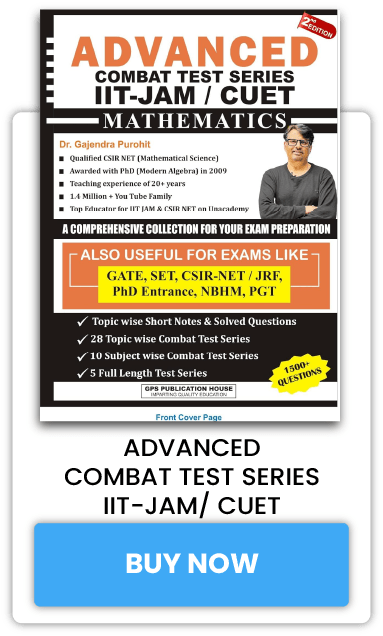
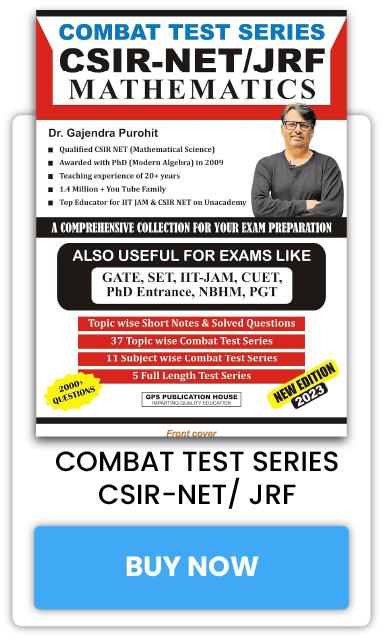
BUY BOOKS ON OUR APP