UPPSC GIC Lecturer Notification 2025
Rajasthan Public Service Commission (RPSC) Grade B: The Union Public Service Commission (UPSC) has released the official notification for the Government Inter College (GIC) Lecturer Recruitment 2025, opening a golden opportunity for postgraduate candidates aspiring to secure prestigious teaching positions under the Uttar Pradesh Government. With 1518 posts and a total of 1516 vacancies, this recruitment drive covers multiple subjects, including mathematics and other disciplines, offering competitive pay, allowances, and career stability. Aspiring candidates must carefully review the key dates, eligibility criteria, exam pattern, syllabus, and application process to ensure timely and accurate submission.

- About UPpSC GIC
- UPPSC GIC Key Dates and Detailed Schedule
- UPPSC GIC Vacancies – Post Distribution and Specialties
- UPPSC GIC Eligibility – Age, Education, and Relaxations
- UPPSC GIC Exam Pattern – Stages and Weightage
- UPPSC GIC Application Process – Step-by-Step Guide
- UPPSC GIC Pay Scale – Salary Structure and Perks
- RPSC Grade B
About UPpSC GIC
The UPPSC Government Inter College (GIC) Lecturer Recruitment is conducted to fill lecturer posts in various Government Inter Colleges (Male & Female) across Uttar Pradesh. It is a highly respected teaching position, offering a Level-8 Pay Scale (INR 47,600 to 1,51,100) along with Dearness Allowance (DA), House Rent Allowance (HRA), medical benefits, and other perks. The recruitment process is competitive, requiring candidates to clear both Prelims and Mains examinations. The UPSC ensures a fair, transparent, and merit-based selection, maintaining the high educational standards of Government Inter Colleges.
UPPSC GIC Key Dates and Detailed Schedule
Notification Release: 12 August 2025 – This marks the official announcement of vacancies, eligibility, and the entire recruitment process, so candidates should start reading the notification thoroughly on this day.
Application Start: 12 August 2025 – From this date, the application window on the official portal opens, allowing candidates to begin filling in their personal details, educational qualifications, and uploading required documents.
Last Date (Apply & Fee Payment): 12 September 2025 – All applications and fee payments must be completed by this date; missing this deadline means no chance to participate in the recruitment.
Correction Window Ends: 19 September 2025 – This is the final day to make corrections to submitted applications, such as fixing name spellings, uploading missing documents, or selecting the right category.
UPPSC GIC Vacancies – Post Distribution and Specialties
Total Posts: 1518 – The number of advertised positions across various subjects and categories.
Total Vacancies: 1518 – Indicates the total seat count including all reservation categories and posts.
Govt. Inter College (Male): 777 – Posts dedicated to male government inter colleges.
Govt. Inter College (Female): 694 – Posts dedicated to female government inter colleges.
Mathematics Vacancies: 122 – A very limited opening for Mathematics subject experts.
Professor, UP Jail Training Institute: 2 – Highly specialized positions requiring relevant subject expertise.
UPPSC GIC Eligibility – Age, Education, and Relaxations
Age Limit: 21–40 years (as on 1 July 2025) – Candidates must ensure their age falls in this bracket to be eligible.
Age Relaxation: As per UP Government rules – Relaxations are available for categories such as SC, ST, OBC, PwD, etc., as notified.
Qualification: Postgraduate in relevant subject + B.Ed. (where applicable) – A postgraduate degree ensures subject depth, while B.Ed. is mandatory for teaching-oriented posts.
UPPSC GIC Exam Pattern – Stages and Weightage
Prelims:
300 Marks, Objective Type – Designed to test both general awareness and subject-specific knowledge.
General Studies – 40 Questions × 2.5 Marks = 100 Marks – Covers history, polity, geography, current affairs, etc.
Optional Subject – 80 Questions × 2.5 Marks = 200 Marks – Based on the subject chosen by the candidate.
Negative Marking: 1/3 per wrong answer – Accuracy is key to avoid losing marks.
Mains:
300 Marks, Descriptive Type – Requires in-depth writing skills and subject mastery.
Single paper in optional subject – Focused entirely on the candidate’s specialization.
UPPSC GIC Application Process – Step-by-Step Guide
Complete One-Time Registration (OTR) – Create a profile with basic personal details.
Fill the form for desired post – Enter education, experience, and select the correct post code.
Upload required documents & pay the application fee – Ensure documents are scanned and legible.
Submit the application before the deadline – Always review before final submission.
UPPSC GIC Pay Scale – Salary Structure and Perks
Level-8: ₹47,600 – ₹1,51,100 – A competitive pay range for Group B posts.
Allowances: DA, HRA, Medical, and other benefits – These make the in-hand salary attractive and ensure financial stability.
UPPSC GIC Mathematics Syllabus
1. Relation and functions:
Types of relations, reflexive, Symmetric, transitive and equivalence relations.
Equivalence class One-one and onto functions, composite of functions, inverse of function, Binary operation. 2. Algebra:
(i) Matrices: Types of matrices, zero matrix, transpose of a matrix, symmetric and skew symmetric Matrices Addition, multiplication & scalar multiplication of matrix Singular and non-singular matrices Ir-revartable matrices
(ii) Determinants: Determinants of a square matrix (up to 3×3 matrix) Properties of determinants, Adjoin and inverse of a square matrix Consistency and number of solutions of system of linear equations by examples. Solving system of linear equations in two of three variables (having unique solutions)
(iii) Theory of equations of degree greater than or equal to two: Arthmatical, Geometrical and Hormonical progressions. Permutations and combinations, Binomial theorem Sum of exponential and logarithmic senes
(iv) Probability: Multiplication theorem on probability, Conditional probability, Independent events Total probability Bayes’s theorem distribution 3. Calculus:
(i) Limit of a function: Continuity & differentiability, derivative of composite functions, and differentiation of different types of functions. Chain rule, Roles theorem and lagrange mean value theorem, Maciaunns & Taylor’s series L. Hospitals rule, partial differentiation, successive differentiation, Leibnitz theorem, equation of tangent & normal to a given curve, Maxima, minima, increasing and decreasing function
(ii) Integration: Various methods of integration of definite integration as a limit of sum, Basic properties of definite integrals & evalution of definite integrals. Application in finding the area under simple curves of spheres, cones & cylinders.
(iii) Differential equations: Order and degree of a differential equation. Formation of differential equations whose general solution is given. Solution of differential equations of Ist order & Ist degree. Linear differential equations with constant coefficients Homogeneous differential equations. 4. Co-ordinate geometry of two dimensions:
Equation of the pair of straight in homogeneous and non homogeneous form. Conditions when a non-homogeneous equation of 2nd degree represents circle, parabola, ellipse and hyperbola equation of tangents & normals to the above conics Common tangents to the two conics, Pair of tangents Chord of contacts, polarlines to the above conics 5. Vectors and three dimensional geometry:
(i) Vectors: Vector & scalars. Unit vectors, Direction considerations of a vector Multiplication of a Vector by scalar, dot product cross product of vector and their in physics (work done and moments, angular velocity, projection of a vector on a line Angle between two vector)
(ii) Three dimension Geometry: Direction cosine ratios of line joining two points, Cartesian and vector equation of a line. Coplanar and skew Ines, shortest distance between two lines, cartesian and vector equation of a plane Angle between (a) two lines (b) two planes (c) Aline and a plane Distance of a point from a plane intersection of two Iine, Intersection of a line of plane & intersection of two plane. Equation of a plane passing through the intersection of two planes
(iii) Equation of a sphere, cones, cylinders. 6. Group:
Examples especially the group of nith roots of unity, group of residue class modulo n and modulo p where p is a prime subgroup. Homomorphism and somorphisms properties of Homomorphism. Subgroups generated by a subset. Order of element in a group, Cyclic group, Symmetric group Sn Lagrange theorem, Fermat’s theorem with application point of view. Normal subgroups Fundamental theorem of Homomorphism, Endomorphism, automorphism, First isomorphism theorem and second isomorphism theorem
Ring and field with simple examples as (2n,⋅,)δ(20,⋅)
Linear Algebra: vector space with examples, subspace, linear dependence and Independence, Basis and dimension of a vector space, Quotient space, Sum and direct sum of spaces. Linear transformation, Karmel and image of a-linear transformation, Rank and nullity of linear transformations, Rank nullity theorem. Composite of linear transformations and its rank & nulity Singular and non singular linear transformation. Transpose of a linear transformation, Matrix of a linear transformation
Vector differentiation: Gradient, divergence, curl, first order vector identities Directional derivatives (with application point of view)
Vector integration: Line integral surface integral, volume integral, Green’s theorem, Gauss-divergence theorem, stokes’s theorem, (From application point of view)
Riemann integration: Integration of discontinuous functions, Lower and upper integrals of a bounded functions, Integration of a step function and signum function
Statics: Equilibrium of a body under the action of three forces, coplanar forces. Equilibrium of a body Under the Action of a system of coplanar forces. Centre of gravity. common catenary Friction
Dynamics: Motion of a projectile in a vertical plane under gravity, Work power and energy. Direct impact of smooth bodies, Radial and transverse Velocity and acceleration Tangential and normal acceleration
Trigonometry: Trigonometric equations, Properties of triangles Inverse circular functions. Height and distance, Complex numbers. D-movers theorem & its application, nth roots of unity
Linear programming, logarithmic differentiation, derivatives of implicit function. approximation, application of derivatives in the form of rate of change of quantities. straight ine, various form of the equation of ine (parallel of axes, point shape form perpendicular form, slope intercept form)
Conclusion
The UPPSC GIC Lecturer Notification 2025 offers a golden opportunity for individuals aspiring to join Uttar Pradesh’s Government Inter Colleges and related institutions. With a clearly defined selection process, attractive pay scale, and detailed syllabus, candidates have a transparent path to follow. Aspirants should begin their preparation early, focusing on both General Studies and their chosen optional subject, while keeping an eye on important dates and application guidelines.
RPSC Grade B
RPSC stands for the Rajasthan Public Service Commission. The RPSC is a constitutional body that conducts recruitment exams and advises the state government on recruitment, transfers, disciplinary actions etc.
if candidates are preparing for RPSC, then they also need to study History, Economy, Geography, Polity, and Current Affairs related to Rajasthan state as mentioned in the RAS Syllabus. Read/download the new and updated RAS Exam Pattern.
The RPSC Programmer age limit is 21 to 40 years. Candidates must have a bachelors or masters degree in Information Technology, Computer Science or Electronics & Communication. Candidates must have valid documents to support their claim of fulfilling the RPSC Programmer eligibility criteria.
The RPSC Programmer age limit is 21 to 40 years. Candidates must have a bachelors or masters degree in Information Technology, Computer Science or Electronics & Communication. Candidates must have valid documents to support their claim of fulfilling the RPSC Programmer eligibility criteria.
During the probation period, these Senior Teachers receive Rs 26500 monthly. After completing probation, the starting salary increases to Rs 37800 per month. After gaining experience, teachers can earn up to Rs 119700 monthly.
BEST OFFERING COURSES FOR YOU
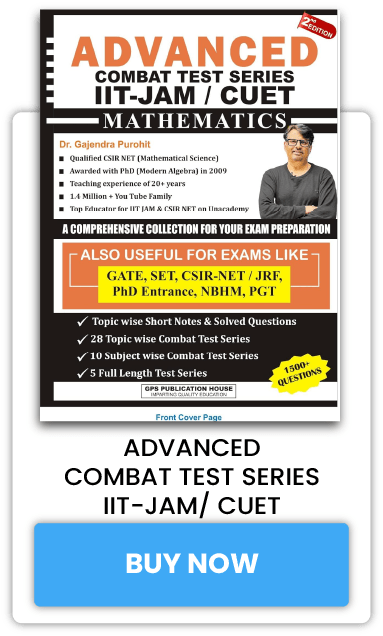
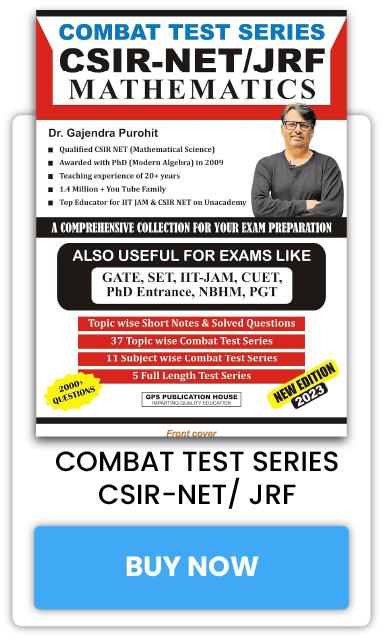
BEST BOOKS FOR IIT JAM/ CSIR-NET
BUY BOOKS ON OUR APP