IIT JAM Scribble Pad Guide
IIT JAM 2025 (Joint Admission Test for Masters): The IIT Joint Admission Test for Masters (JAM) is a highly competitive examination that opens doors to postgraduate programs in prestigious institutes like IITs and IISc. Since the exam is conducted in a computer-based mode, candidates are provided with a scribble pad to perform rough calculations, make essential notes, and structure their approach to answering questions. Effective usage of this scribble pad can significantly improve accuracy, minimize errors, and optimize time management. This guide explores the best strategies to utilize the IIT JAM scribble pad to its full potential.
1. Importance of the Scribble Pad in IIT JAM
The scribble pad is an indispensable tool for solving numerical and conceptual problems in subjects like Mathematics, Physics, and Chemistry. Since calculations can be lengthy and complex, a systematic approach to using the scribble pad can greatly enhance problem-solving efficiency.
With the scribble pad, candidates can:
Perform step-by-step calculations to reduce computational mistakes.
Draw diagrams, graphs, and flowcharts for better visualization.
Break down multi-step problems systematically.
Keep track of formulas and key values for quick reference.
Since candidates cannot revisit previous questions in some sections, maintaining an organized rough work structure is crucial to avoid confusion and miscalculations.
2. IIT JAM Scribble Pad Guide
The following strategies will help candidates utilize the scribble pad effectively and maximize their efficiency in the exam:
Writing Name and Registration Number
Before beginning the exam, write your name and registration number on the scribble pad. This step is essential as per examination guidelines and ensures that your rough work is correctly associated with your attempt. Neglecting this could result in potential compliance issues, so it is best to complete this task immediately upon receiving the scribble pad.
Dividing Each Page for Maximum Efficiency
A structured layout on the scribble pad prevents clutter and confusion. Candidates should:
Allocate separate sections for different types of problems.
Use a left margin to number each question’s rough work clearly.
Leave spaces between solutions to avoid overlapping calculations.
Keep a designated section for formulas or quick conversions.
Dividing the page systematically allows for quick navigation when revisiting calculations and ensures smoother problem-solving.
Mentioning Question Numbers Clearly
To avoid mistakes while transferring answers, it is crucial to label each rough calculation with the correct question number. This prevents confusion and helps in double-checking work efficiently.
Best practices include:
Writing the question number prominently before starting calculations.
Using a consistent labeling format (e.g., “Q3 – Integration of Trigonometric Functions”).
Cross-verifying question numbers before submitting answers.
Writing in Small and Legible Handwriting
Since the scribble pad has a limited number of pages, candidates should ensure they write small yet readable text to conserve space while maintaining clarity.
To optimize space usage:
Use abbreviations and symbols where appropriate.
Write neatly to avoid errors during quick reviews.
Avoid unnecessary repetitions in calculations.
By practicing small and clear handwriting, candidates can ensure all rough work remains readable and accessible.
Solving Problems Systematically
A structured approach to problem-solving on the scribble pad enhances accuracy and minimizes careless mistakes.
To achieve systematic rough work:
Start with the formula before substituting values.
Follow a stepwise breakdown rather than performing calculations haphazardly.
Highlight or box important intermediate results to track progress easily.
Solving problems in a clear and structured manner makes it easier to double-check work if needed.
Highlighting Key Results and Formulas
During the exam, it is beneficial to box or underline key results and formulas to ensure they stand out for quick reference.
This practice is useful for:
Revisiting critical calculations efficiently.
Preventing misinterpretation of values.
Quickly recalling essential formulas when solving multiple problems.
Marking significant figures distinctly reduces errors and improves problem-solving efficiency.
Practicing with a Mock Test Using a Scribble Pad
To develop a habit of using the scribble pad effectively, candidates must incorporate it in their mock test practice. Simulating real exam conditions helps in:
Refining the approach to rough work.
Identifying time-saving techniques for calculations.
Adapting to space limitations effectively.
Using a scribble pad in all practice sessions ensures that candidates are well-prepared to handle it efficiently on the exam day.
3. Common Mistakes to Avoid
Even with a well-structured scribble pad, some common mistakes can lead to inefficiencies and errors. Candidates should avoid:
Skipping question numbers when doing rough work, which can cause confusion.
Messy and unstructured calculations, making it harder to review work.
Wasting too much space, leading to running out of pages.
Ignoring key calculations, resulting in careless mistakes in final answers.
By being mindful of these mistakes, candidates can ensure their rough work remains clear and effective.
4. Admit Card Download
The IIT JAM admit card is a mandatory document required to appear for the exam. It is usually released a few weeks before the exam date on the official JAM website.
Steps to Download the Admit Card:
Visit the official IIT JAM website.
Click on the admit card download link.
Enter your enrollment ID and password.
Verify the details and download the PDF copy.
Print multiple copies for future reference.
Candidates must check for errors in their name, exam center, and subject details to avoid issues on exam day.
5. Exam Day Guidelines
The IIT JAM exam consists of objective-type questions from subjects like Mathematics, Physics, Chemistry, and others. Since the test is computer-based, candidates must be comfortable navigating the digital interface.
Important Exam Day Guidelines:
Carry a printed admit card and a valid photo ID.
Reach the exam center at least 30 minutes before the reporting time.
Electronic devices, calculators, and study material are not allowed.
Use the provided scribble pad for rough work and calculations.
By following these guidelines, candidates can avoid unnecessary stress and focus on their performance.
6. Paper Pattern
Understanding the exam pattern is crucial for effective preparation. The IIT JAM paper consists of three types of questions:
Multiple Choice Questions (MCQs): Four options, one correct answer.
Multiple Select Questions (MSQs): One or more correct answers.
Numerical Answer Type (NAT) Questions: No options, candidates enter answers manually.
Paper Structure:
Total Marks: 100
Duration: 3 Hours
Total Questions: 60
Negative Marking: Applicable only for MCQs
By familiarizing themselves with the pattern, candidates can strategize their approach to maximize scores.
8. Preparation Strategy
A strong preparation strategy is key to excelling in IIT JAM. Here are some essential tips:
Study Plan:
Understand the syllabus: Focus on high-weightage topics.
Practice regularly: Solve previous years’ papers and mock tests.
Time management: Allocate time for each section based on difficulty level.
Revise frequently: Keep notes for quick revision before the exam.
Recommended Study Resources:
NCERT books for basics.
Online resources such as mock tests and video lectures.
A well-structured study plan ensures comprehensive coverage of the syllabus and boosts confidence.
Conclusion
The scribble pad in IIT JAM is more than just a rough work sheet—it is a powerful tool for structured problem-solving and effective time management. By following best practices such as writing neatly, dividing sections, labeling questions, and highlighting key results, candidates can significantly improve their accuracy and confidence during the exam.
A well-organized scribble pad can make a major difference in handling complex problems efficiently. Mastering its use is as crucial as mastering the subject itself. By practicing strategically and implementing the right techniques, aspirants can maximize their performance and achieve success in IIT JAM 2025.
IIT JAM FAQS
To be considered under the PwD category, a minimum of 40% disability is required, as per the guidelines of the RPwD Act.
JAM 2025 will only be conducted in English. There is no option for regional languages.
JAM scores are primarily for Indian institutes, but you may need to check with international universities individually to see if they accept JAM scores.
You will know your exam center details once your admit card is released. Exam centers cannot be visited beforehand.
While JAM is primarily for science graduates, some interdisciplinary programs may accept students from related backgrounds. Check the eligibility criteria for the specific program you’re interested in.
BEST OFFERING COURSES FOR YOU
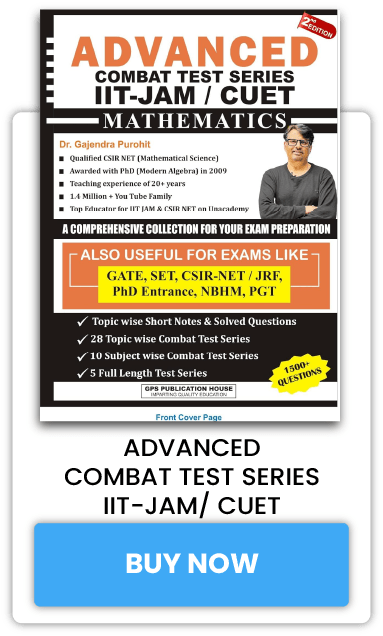
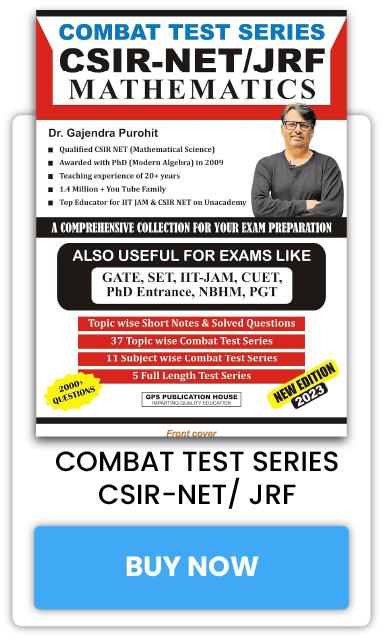
BEST BOOKS FOR IIT JAM/ CSIR-NET


BUY BOOKS ON OUR APP