IIT JAM 2026 Important Dates (Tentative)
IIT JAM 2025 (Joint Admission Test for Masters) The IIT Joint Admission Test for Masters (IIT JAM) is a gateway to postgraduate science programs like MSc, Joint MSc-PhD, and MSc-PhD Dual Degrees across IITs and IISc. For candidates aiming to appear in JAM 2026, staying on top of important deadlines is crucial for timely registration, correction requests, and admission applications. Although official dates will be confirmed by the organizing institute later in 2025, we’ve compiled a tentative timeline based on previous JAM cycles to help you plan ahead.

About IIT JAM 2026
IIT JAM 2026, or the Indian Institute of Technology Joint Admission Test for Masters, is a national-level entrance exam conducted annually for students seeking admission to postgraduate programs such as MSc, Joint MSc-PhD, and Dual Degree courses offered by the IITs and IISc. The exam serves as a standardized benchmark for academic proficiency in science subjects including Mathematics, Physics, Chemistry, Biotechnology, Economics, and Geology. It is widely recognized for its transparent evaluation process and opens pathways to top-tier research and academic careers in India. The official organizing institute for JAM 2026 is expected to be announced by mid-2025.
JAM 2026 Tentative Dates Based on Previous Trends
Based on the 2025 cycle, here are the tentative key events and dates for IIT JAM 2026:
| Event | Tentative Date |
| Opening of JOAPS Portal for Online Applications | First Week of September 2025 |
| Last Date to Submit Application Form | Third Week of October 2025 |
| Correction Window (City/Paper/Category) | Mid-November 2025 |
| Last Date to Upload OBC-NCL/EWS Certificate | Third Week of November 2025 |
| Confirmation of Scribe/Extra Time Requests | End of December 2025 |
| Release of Admit Cards | First Week of January 2026 |
| Date of JAM 2026 Examination | First Sunday of February 2026 (Likely February 1, 2026) |
| Display of Answer Keys | Second Week of February 2026 |
| Challenge Window for Answer Keys | Mid-February 2026 (Approx. 5–7 Days) |
| Declaration of Results | Mid to Third Week of March 2026 |
| Availability of Scorecards | Last Week of March 2026 |
| Opening of Admission Portal (JOAPS) | First Week of April 2026 |
What to Expect Next
The official schedule for JAM 2026 will be published by the organizing IIT on the JAM website in mid-2025. Once released, all aspirants are advised to:
Bookmark the official portal and check regularly
Download a personal copy of the timeline
Subscribe to email alerts or Telegram groups for real-time notifications
It’s also wise to keep certificates, identity proofs, category documents, and scanned photos/signatures ready in advance to avoid last-minute rush.
IIT JAM 2026 Eligibility Criteria
To appear for JAM 2026, candidates must have completed or be in the final year of a bachelor’s degree with relevant subjects. There is no minimum percentage requirement, and no age limit for appearing in the exam. Candidates from foreign universities may apply, subject to the individual institute’s admission policies. However, candidates must ensure they meet the Eligibility Requirements (ERs) and Minimum Educational Qualifications (MEQs) for each program they wish to apply for.
IIT JAM 2026 Application Form Fee (Category-wise)
The application fee for JAM 2026 is expected to remain similar to the JAM 2025 structure:
Female / SC / ST / PwD: ₹900 for one paper, ₹1250 for two papers
All Others: ₹1800 for one paper, ₹2500 for two papers
Fees are payable online via credit card, debit card, or net banking. Late submission or changes in application details may incur additional charges.
IIT JAM 2026 Mathematics Syllabus
The Mathematics paper in JAM 2026 will focus on rigorous undergraduate-level topics spanning real analysis, calculus, algebra, and linear algebra. The detailed topics are as follows:
Sequences and Series: Convergence of sequences, bounded and monotone sequences, Cauchy sequences, Bolzano-Weierstrass theorem, absolute convergence. Series convergence tests such as comparison test, ratio test, and root test. Power series (in one real variable), radius and interval of convergence, and term-wise differentiation and integration of power series.
Functions of One and Several Variables: Includes limit, continuity, intermediate value property, differentiation, Rolle’s Theorem, mean value theorem, L’Hospital’s rule, Taylor’s theorem, Taylor’s series, and identification of maxima and minima for single-variable functions. In multivariable settings, includes limits and continuity, partial derivatives, total derivative, and identification of extrema for functions of two or three variables.
Integral Calculus: Encompasses double and triple integrals, change of order of integration, surface area and volume computations using double and triple integrals. This section emphasizes both conceptual understanding and practical integration skills.
Differential Equations: Covers first-order and second-order differential equations including Bernoulli’s equation, exact differential equations, integrating factors, orthogonal trajectories, homogeneous differential equations, and method of separation of variables. Second-order linear differential equations with constant coefficients, method of variation of parameters, and the Cauchy-Euler equation are also included.
Linear Algebra: Topics include matrices, systems of linear equations, rank, nullity, inverse, determinants, eigenvalues, and eigenvectors. Vector spaces, basis, dimension, linear independence, linear transformations, matrix representation, range and null space, and the rank-nullity theorem are also fundamental.
Group Theory: Covers basic concepts in algebra such as cyclic groups, abelian and non-abelian groups, permutation groups, normal subgroups, quotient groups, and Lagrange’s theorem for finite groups. The emphasis is on understanding the structure and properties of groups along with basic operations and applications.
This comprehensive syllabus aims to test both fundamental theoretical knowledge and problem-solving aptitude across all core mathematics domains relevant to postgraduate science studies.
IIT JAM 2026 Paper Pattern
The JAM 2026 exam will be a 3-hour Computer-Based Test (CBT) consisting of 60 questions for 100 marks. It includes:
Section A: 30 MCQs – Negative marking applies
Section B: 10 MSQs – No negative marking
Section C: 20 NATs – No negative marking
The exam is conducted in English and tests both theoretical understanding and analytical ability.
IIT JAM 2026 Preparation Tips
To perform well in JAM 2026:
Start Early: Begin preparation at least 6–8 months in advance
Use Standard Books: Focus on textbooks used during graduation
Practice PYQs: Solve previous year question papers to understand patterns
Mock Tests: Regularly attempt mock exams under timed conditions
Revise Regularly: Maintain formula sheets and revision schedules
Strategic preparation with consistency and revision is key to cracking the JAM exam.
Conclusion
Planning for IIT JAM 2026 begins well before the actual exam date. With the tentative dates mapped against past trends, candidates can now chart their study plans and documentation preparation around these key events. Keep an eye on the official JAM 2026 portal and act early—because every missed deadline is a missed opportunity. Stay updated, stay focused, and stay ahead.
IIT JAM FAQS
You can re-download and print the Admit Card from the JAM 2025 portal. No duplicate hard copies will be issued.
For any queries or issues, you can contact the JAM Organizing Committee through their official email or helpline numbers provided on the JAM website.
Candidates belonging to reserved categories (SC, ST, OBC-NCL, PwD) are eligible for seat reservations according to government regulations.
Instructions during the exam will be displayed on the computer screen. No verbal instructions will be given during the exam.
JAM does not allow for re-evaluation or rechecking of exam papers, as they are evaluated using a computerized process.
BEST OFFERING COURSES FOR YOU
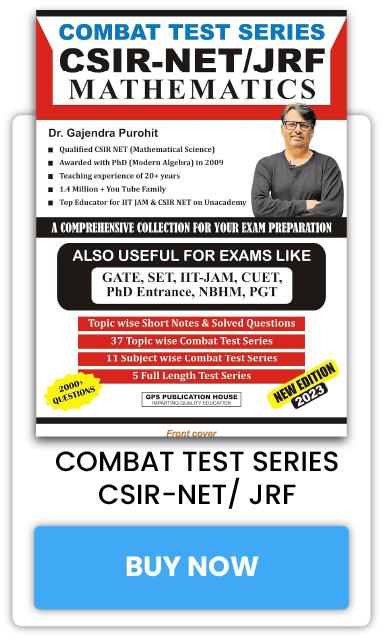
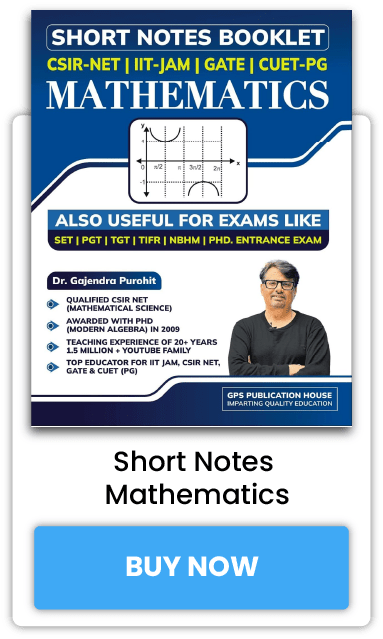
BEST BOOKS FOR IIT JAM/ CSIR-NET
BUY BOOKS ON OUR APP