Is IIT JAM Tough? Difficulty, Competition and Strategy
IIT JAM 2025 (Joint Admission Test for Masters) :IIT JAM (Joint Admission Test for MSc) is widely regarded as one of the most competitive entrance exams for postgraduate science education in India. Conducted annually by the Indian Institutes of Technology (IITs), this examination serves as a gateway to some of the most reputed academic and research programs in the country. It allows science graduates to secure seats in MSc and Integrated PhD programs offered by IITs, IISc, and several top-tier NITs. While the academic rewards are high, the intensity of competition and rigorous examination pattern make many students wonder—how tough is IIT JAM really? In this blog, we break down the various aspects of the exam’s difficulty to help you navigate the challenge with clarity and direction.
About IIT JAM
The IIT Joint Admission Test for MSc (IIT JAM) is a centralized national-level entrance exam designed for graduates in science disciplines who aim to pursue higher education at India’s top institutions. Launched in 2004, it has grown into a trusted assessment method for admission into MSc, Joint MSc-PhD, and Integrated PhD programs. Unlike conventional entrance tests that assess general aptitude, IIT JAM focuses on subject-specific depth in fields such as Mathematics, Physics, Chemistry, Biotechnology, Economics, Geology, and Mathematical Statistics. The objective of JAM is not only to test knowledge but also to gauge analytical ability, problem-solving aptitude, and academic maturity—qualities necessary for postgraduate research.
IIT JAM Paper Pattern
The IIT JAM examination spans a 3-hour duration and is conducted in a Computer-Based Test (CBT) format. The question paper carries a total of 100 marks and comprises 60 questions, grouped into three distinct sections:
Section A (Multiple Choice Questions): Contains 30 questions, split into 10 one-mark and 20 two-mark questions. Incorrect answers incur negative marking.
Section B (Multiple Select Questions): Comprises 10 questions, each carrying two marks. One or more options may be correct, and there is no negative marking.
Section C (Numerical Answer Type Questions): Includes 20 questions requiring candidates to type in a numerical value. There are no options provided and no negative marking.
The structure is deliberately varied to assess a wide range of cognitive skills—from quick decision-making to deep comprehension and precise calculations. Success in JAM depends not just on knowing the right answers but on navigating through the format with agility and clarity.
Candidates Appeared in IIT JAM 2025
As per the latest statistics, around 68,000 candidates appeared for IIT JAM 2025 across all subjects. The Mathematics paper alone saw participation from approximately 12,716 candidates, highlighting its popularity and competitive nature. This figure signifies a rising trend in applications, owing to the expanding academic scope of the JAM exam and the growing number of seats in IITs and other institutes. The surge in aspirants is also indicative of JAM’s increasing reputation as a reliable route to prestigious postgraduate studies in India.
Seats Available in IITs (Direct Admission)
In 2025, around 3,000 seats were available across 23 IITs for direct admission via IIT JAM scores. These seats span a broad range of disciplines, including but not limited to Mathematics, Physics, Chemistry, Biosciences, and interdisciplinary sciences. Each IIT publishes a program-wise seat matrix every year, segmented by discipline, category (General/OBC/SC/ST), and program type (MSc, MSc-PhD). While the number of seats may appear limited, they offer unparalleled academic mentorship, research exposure, and career-building opportunities that continue to attract top-tier candidates from across the country.
Seats Available in NITs and CFTIs (JAM-Based Admission)
Beyond IITs, the Centralized Counselling for MSc Admissions (CCMN) coordinates postgraduate admissions based on JAM scores for NITs, IIITs, IIEST Shibpur, and other centrally funded technical institutions. In 2025, over 2,000 additional seats were available through this channel. The availability of seats through JAM has nearly doubled in the past decade, and these institutions offer strong faculty, research facilities, and placement support. The expanding seat matrix reflects JAM’s importance as a national platform for advancing scientific education beyond the IIT ecosystem.
IIT JAM Exam Form Fee (2025)
The application fee for JAM 2025 was tiered by category and the number of papers chosen:
₹900 – For SC/ST/PwD/Female candidates (for one paper)
₹1,250 – For SC/ST/PwD/Female candidates (for two papers)
₹1,800 – For General/OBC (NCL) candidates (for one paper)
₹2,500 – For General/OBC (NCL) candidates (for two papers)
The application process was conducted via the JAM Online Application Processing System (JOAPS), and the fee was payable through net banking, debit, or credit cards. This modest fee, when compared to the career outcomes JAM can unlock, makes it an accessible and highly valuable opportunity for serious aspirants.
Difficulty Level of IIT JAM Paper
The difficulty of IIT JAM varies by subject, but it is broadly rated as moderate to high on the competitive scale. Several factors contribute to this reputation:
Conceptual Depth: Unlike exams focused on factual recall, JAM questions test your grasp of the underlying theory. Subjects like Real Analysis in Mathematics or Physical Chemistry require a solid understanding of principles.
Format Complexity: The inclusion of NAT and MSQ questions means that candidates must not only solve accurately but interpret problem statements carefully. This increases the cognitive load and often leads to silly mistakes.
Negative Marking Pressure: Especially in Section A, wrong guesses can significantly impact your score.
Cutoff Trends: In 2024, for instance, the General category qualifying cutoff for Mathematics was 11.22 out of 100—an indicator that the paper was conceptually intense and numerically tricky.
Time Management Challenge: The three-hour window can feel tight, especially when faced with multi-step problems in NAT and MSQ sections.
Taken together, these elements make JAM a test that not only evaluates what you know, but how well and how quickly you can apply that knowledge under pressure.
Tips for IIT JAM Preparation
Success in IIT JAM demands structured, deliberate, and long-term planning. Below are some essential strategies to guide your preparation:
Start Early: Begin preparation 10–12 months before the exam to cover all major topics at a comfortable pace and allow time for revision.
Master the Core Syllabus: Identify and prioritize high-weightage topics in your chosen subject. For Mathematics, this includes Real Analysis, Linear Algebra, and Differential Equations.
Use Quality Study Material: Stick to standard undergraduate textbooks and IIT JAM-specific guides. Avoid relying on unverified online sources.
Solve Previous Year Papers: Practicing PYQs helps you understand question types, recurring concepts, and difficulty trends.
Mock Tests and Time Trials: Regularly take full-length mock exams under exam-like conditions to build stamina and accuracy.
Consistent Revision: Make summary notes, formula sheets, and flashcards. Revise weekly to avoid forgetting older topics.
Track Progress and Mistakes: Maintain an error log and revisit weak areas regularly. Analyzing your own mistakes is one of the most effective ways to improve.
Conclusion
There is no denying that IIT JAM is a challenging examination. Its layered format, wide syllabus, and stiff competition require a level of preparation that goes beyond rote learning. However, this very difficulty is what makes the exam a credible and prestigious gateway to India’s top science institutes. With methodical preparation, strong conceptual understanding, and consistent practice, cracking IIT JAM is not just possible—it’s a rewarding journey that can open doors to advanced research, academic excellence, and impactful careers. In the end, while IIT JAM may be tough, it is also an opportunity that is entirely worth striving for.
IIT JAM FAQS
You can re-download and print the Admit Card from the JAM 2025 portal. No duplicate hard copies will be issued.
For any queries or issues, you can contact the JAM Organizing Committee through their official email or helpline numbers provided on the JAM website.
Candidates belonging to reserved categories (SC, ST, OBC-NCL, PwD) are eligible for seat reservations according to government regulations.
Instructions during the exam will be displayed on the computer screen. No verbal instructions will be given during the exam.
JAM does not allow for re-evaluation or rechecking of exam papers, as they are evaluated using a computerized process.
BEST OFFERING COURSES FOR YOU
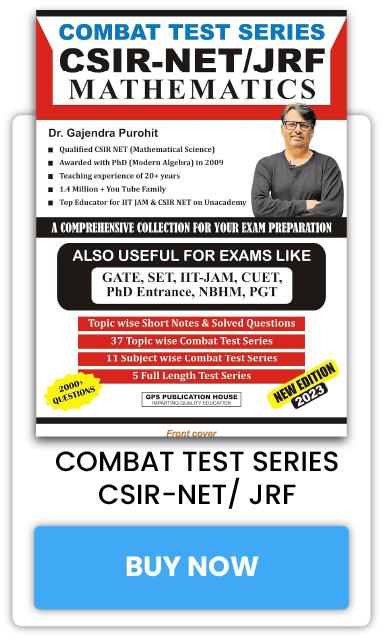
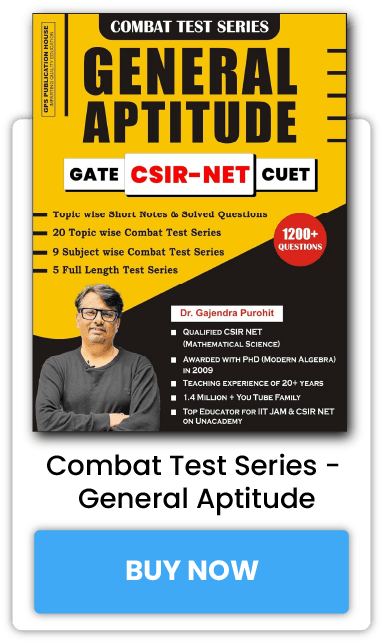
BEST BOOKS FOR IIT JAM/ CSIR-NET

BUY BOOKS ON OUR APP